

✍️ By Rahul Goyal · Chandigarh Life
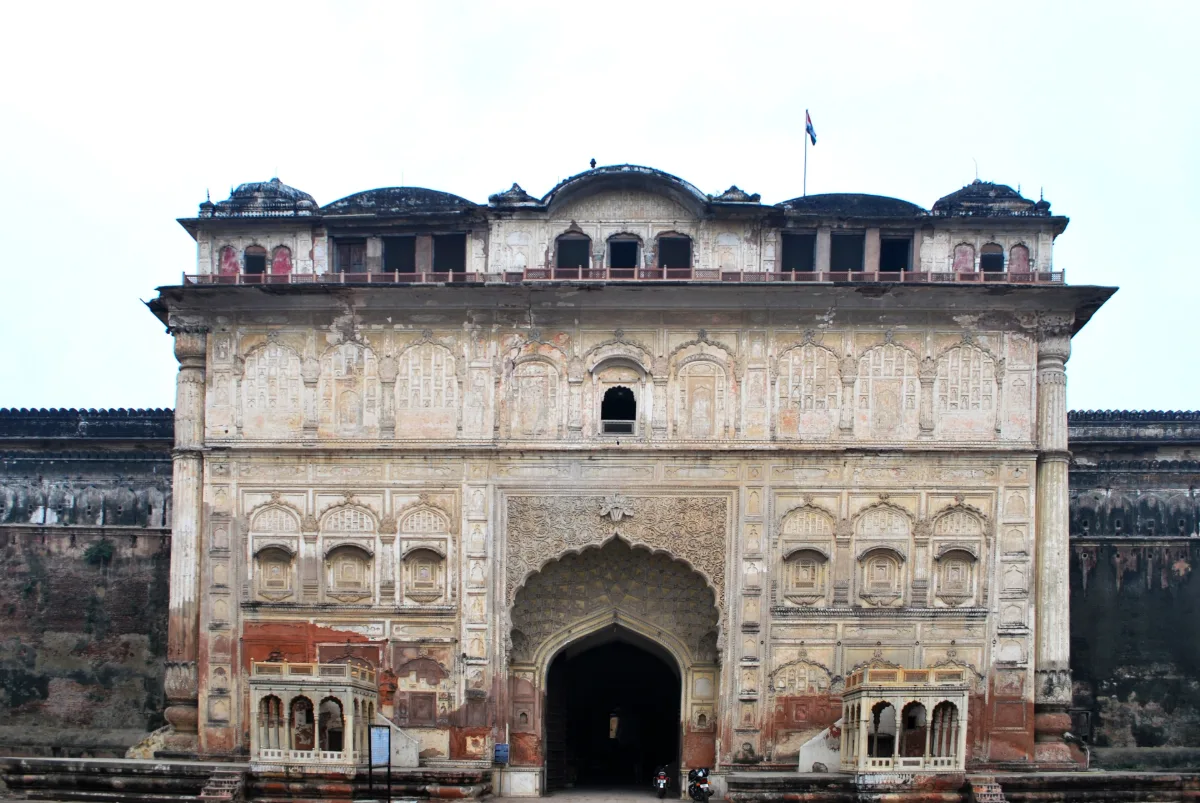
Quick answer: Qila Mubarak, in the old city of Patiala, is the fort and former palace of the Patiala rulers, first built as a mud-and-brick fortress in 1763 by Baba Ala Singh, according to Wikipedia. Google Maps describes it as open to the public with an antique weapons collection, and shows about 66 km and 1 hour 20 minutes by road from Chandigarh. Much of the complex is in poor condition and parts are closed, and we found no official timings or fee.
Patiala is a comfortable day trip from Chandigarh, and Qila Mubarak is the anchor of its royal heritage. This guide draws on Wikipedia, the Patiala district portal, which has pages for other royal sites but none for Qila Mubarak, and Google Maps. It notes where the sources disagree, including on how much of the fort you can enter.
Qila Mubarak at a glance
| Detail | What we found |
|---|---|
| What it is | A fort-palace of the Patiala rulers in the old city, of Sikh architecture; the name means “fort of felicity” in Persian (Wikipedia) |
| Built | First built in 1763 by Baba Ala Singh as a mud-and-brick fortress, later rebuilt in baked brick and added to by successive rulers (Wikipedia) |
| Where | Adalat Bazar, Patiala, Punjab 147001; plus code 8CF3+WH on Google Maps |
| From Chandigarh | About 66.2 km, roughly 1 hour 20 minutes via the Bathinda–Chandigarh highway on Google Maps; another route via SH 12A and Sirhind–Patiala Road is 76.0 km (1 hour 31 minutes) |
| Timings | Google Maps showed “opens 10 am Tue” when we checked on a Monday, so it appears closed on Mondays. We found no official timings or entry fee |
| Access | Wikipedia says much of the fort is closed, including the Sheesh Mahal, though the Darbar Hall museum and a few other parts can be visited; Google Maps calls it open to the public |
| Visitor rating | 4.3 on Google Maps, about 8,400 reviews (21 September 2026) |
History: from a mud fort to a royal palace
Wikipedia says Baba Ala Singh, the founder of the Patiala branch of the Phulkian dynasty, first built Qila Mubarak as a mud-and-brick “kachigarhi” in 1763, using revenue from Sirhind, which the Sikhs had conquered a few years earlier. It was later rebuilt in baked brick. The article adds that the fort is said to stand on a Mughal fortress built by the governor Hussain Khan, a claim the article introduces with “it is said”.
Over about a century and a half, the article says, later rulers added to the complex in different styles. The inner fort, Qila Androon, is attributed to Maharaja Amar Singh, the outer portions to Maharaja Karam Singh, and the Darbar Hall was built by Maharaja Narinder Singh in 1859. It says the ruling family moved to a newer palace outside the old town in the 1840s, that the Punjab government used the complex for offices after 1947 and vacated it in the 1960s, and that it has been protected at state level since 1964 and at national level since 1994. It also says the World Monuments Fund listed the fort among the 100 most endangered sites in 2004.
What to see
- Darbar Hall museum: the former audience hall now holds a museum. Wikipedia says it displays rare cannons, swords, shields, maces, daggers of Guru Gobind Singh and a sword of Nadir Shah; Google Maps calls the fort open to the public with an antique weapon collection.
- Qila Androon: the inner royal residence, which Wikipedia says has 13 chambers painted with scenes from Hindu mythology in the Patiala style, and holds a sacred fire, the Akhand Jyot, said to have been brought from the Jwalamukhi temple by Baba Ala Singh. By local lore, as long as it burns, Patiala will prosper; that is a tradition, not a checked fact.
- Sheesh Mahal of the fort: a mirror-work and fresco hall in the men’s quarters, which Wikipedia says is closed to the public; its murals show the Bihari-Satsai and Baramasa series and Hindu deities.
- Sarad Khana and Jalau Khana: Wikipedia describes the Sarad Khana as a chamber for European guests and the Jalau Khana as an exhibition hall with columns, both open to the public.
- Ran Baas: the royal guest house, which Wikipedia says was renovated and opened as a heritage hotel in 2025; Google Maps lists it as Ranbass the Park hotel.
Condition and visiting
- Condition: Wikipedia says parts have collapsed or discoloured through neglect and that two thefts of miniature paintings were reported, in the 1990s and 2004. Visitors on Google Maps also mention limited upkeep, so expect a heritage site in need of repair.
- Timings and fee: we found no official schedule or fee. Google Maps suggests a Monday closure and a 10 am opening; confirm locally before you travel.
- Walks: Wikipedia records a heritage walk on the fort led by Sahapedia in 2019, and Google Maps lists a Patiala Heritage Walk (4.2 from about 160 reviews); we have not verified whether it is running now.
- Setting: the complex sits in the middle of the old city, near Adalat Bazar and other markets, so expect a busy market area.
Elsewhere in royal Patiala, from the district portal
- Sheesh Mahal (Moti Bagh): the district portal says it was built behind the main Moti Bagh Palace as a pleasure complex, with paintings in two mirror-worked chambers in the Kangra and Rajasthani styles, and now houses a museum, an art gallery, the medal gallery and the North Zone Cultural Centre. This is a separate building from the Sheesh Mahal inside Qila Mubarak.
- Moti Bagh Palace: begun under Maharaja Narinder Singh and completed under Maharaja Bhupinder Singh in the early 20th century; the district portal says the old palace houses the National Institute of Sports and stands in a terraced garden.
- Baradari Gardens: north of the old city, outside Sheranwala Gate, laid out under Maharaja Rajindera Singh, with rare trees, colonial buildings, a marble statue of the Maharaja and the 19th-century Fern House, a replica of the one in Calcutta.
- Bahadurgarh Fort: the district portal also lists Qila Bahadurgarh as a tourist place, but visitors report it is closed for commando training; read our Bahadurgarh Fort guide before planning a visit.
How to reach Qila Mubarak from Chandigarh
Google Maps shows about 66.2 km and 1 hour 20 minutes via the Bathinda–Chandigarh highway, and 76.0 km and 1 hour 31 minutes via SH 12A and the Sirhind–Patiala road. The district portal says the nearest airport is Chandigarh; for the old city, use the live route on the day.
More heritage trips from Chandigarh
- Forts near Chandigarh and historical places in Chandigarh.
- Sikh heritage day trip: Fatehgarh Sahib and Virasat-e-Khalsa, since Baba Ala Singh built the fort with revenue from Sirhind.
Frequently asked questions
What is Qila Mubarak?
It is the fort and former palace of the Patiala rulers, in the old city of Patiala, Punjab. Wikipedia says it was first built in 1763 by Baba Ala Singh, and its name means “fort of felicity”.
Can you visit Qila Mubarak?
Google Maps calls it open to the public, and Wikipedia says the Darbar Hall museum and some other parts can be visited while much of the fort, including the Sheesh Mahal, is closed. We found no official timings, so confirm locally.
How far is Qila Mubarak from Chandigarh?
Google Maps shows about 66.2 km and roughly 1 hour 20 minutes via the Bathinda–Chandigarh highway.
What is inside the Darbar Hall museum?
Wikipedia says rare cannons, swords, shields, maces, daggers of Guru Gobind Singh and a sword of Nadir Shah are displayed there.
Is there an entry fee?
We found no official information on fees, so confirm at the fort.
What else is there to see in Patiala?
The district portal lists the Sheesh Mahal and Moti Bagh Palace, Baradari Gardens with its Fern House, Bahadurgarh Fort, a Kali temple and Gurudwara Dukhniwaran Sahib.