

✍️ By Rahul Goyal · Chandigarh Life
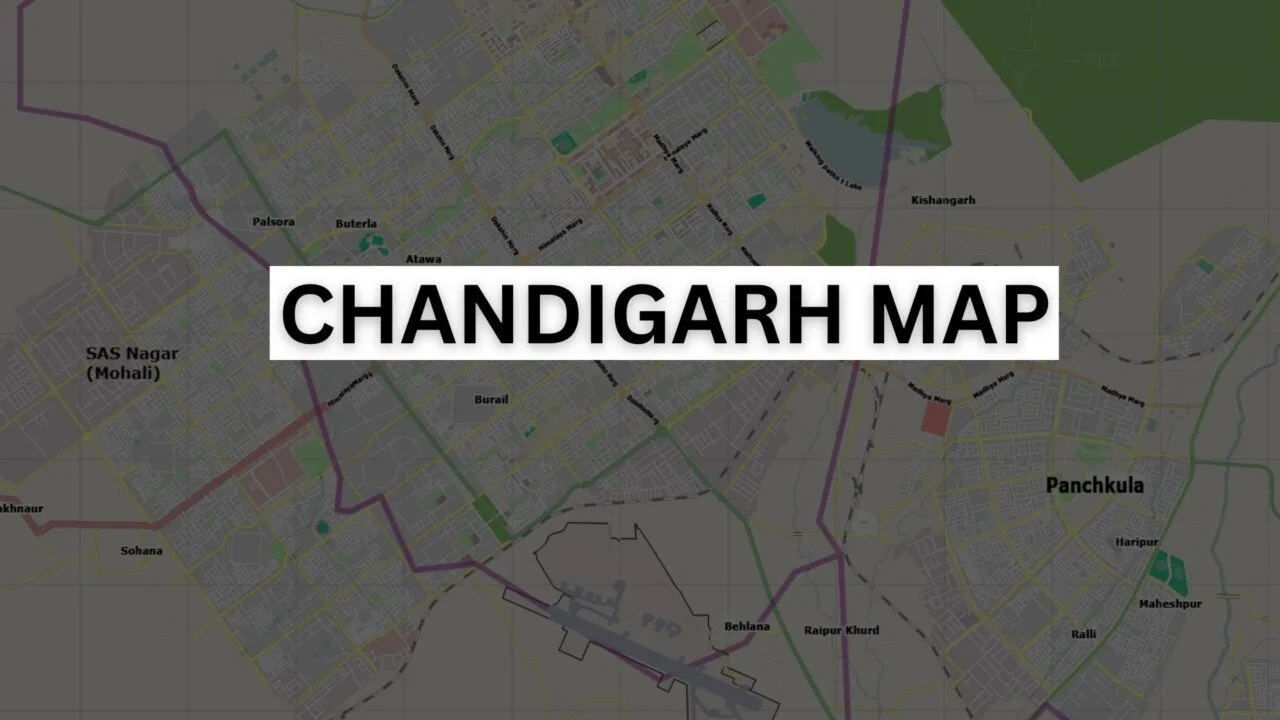
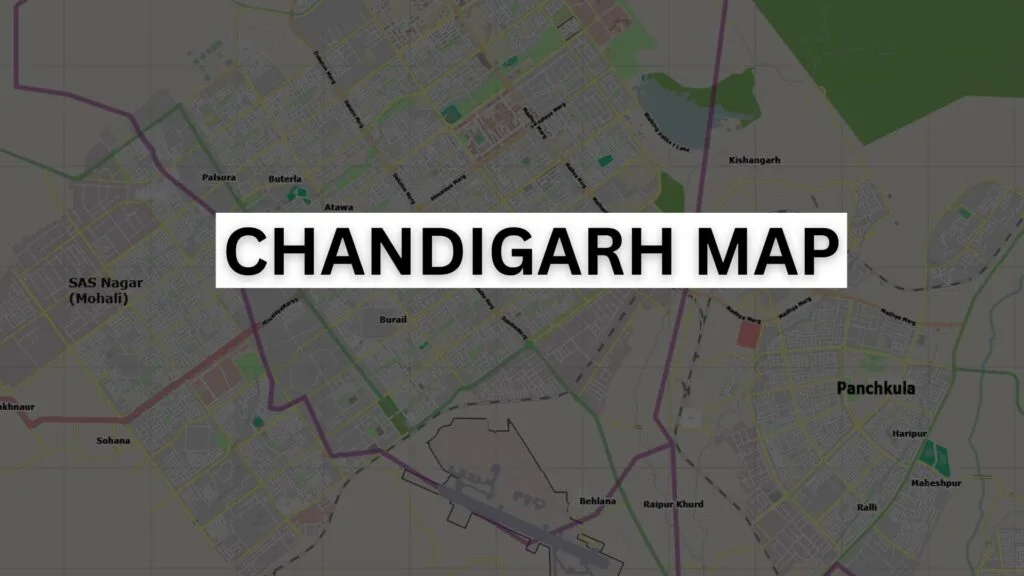 Chandigarh Map: When you are looking at the map of Chandigarh, it’s not just roads and sectors, but you are looking at the vision of a modern India, beautifully and purposefully drawn out. Every line, intersection, and open space on the map was purposefully designed to embody order, functionality, and beauty. Conceived by the legendary architect Le Corbusier, Chandigarh stands as a living example of thoughtful urban planning, where the layout is not just practical but symbolic of progress, harmony, and innovation.
An Interpretive Chandigarh Map
Did you know that Chandigarh was a planned city, in contrast to many others that developed naturally over centuries? That genius is reflected in its map. The city’s layout, which was created in the 1950s by renowned architect Le Corbusier and his team, is a work of architectural art. It is orderly, symmetrical, and divided into independent areas known as “sectors of life”.The map’s sectors are thoughtfully organized with:- Household areas
- Parks and green areas
- Retail Establishments
- Educational establishments
- Areas for recreation and health
| Feature | Description |
| Size | Roughly 800m x 1200m |
| Infrastructure | Residential areas, markets, schools, parks, and essential services |
| Connectivity | Wide roads and green belts connect sectors |
| Design Philosophy | Focus on walkability, accessibility, and urban balance |
Sectors 1 to 3 Chandigarh Map
- In sectors 1 to 3, it’s basically a home to the Capitol Complex, the High Court, and the Secretariat.
- Which symbolises governance, power, and Le Corbusier’s architectural legacy.
- The place is grand, quiet, and mostly administrative.
Sectors 10, 11 and 14 CMap
- In Sectors 10, 11, and 14, there are some museums, art galleries, and top colleges like Panjab University & PEC.
- The place is intellectual, calm, and inspiring for students and creative people.
Sectors 17, 22, 35, 34 Chandigarh map
- Sectors 17, 22, 35 and 34, bustling with shopping plazas, markets, cafes, and businesses.
- The city’s energy centres are perfect for hanging out, working, and retail therapy.
Sectors 7–9, 15–19, 21–30 Chandigarh map
- In Sectors 7–9, 15–19, and 21–30, there are beautiful bungalows, tree-lined streets, and local parks.
- This place is peaceful and ideal for families; these sectors represent Chandigarh’s timeless charm.
Sectors 31–38, 44–46 Chandigarh Map
- Sectors 31–38 and 44–46 are a mix of independent homes, flats, and small markets.
- These sectors are functional and family-friendly, with all basic amenities nearby.
Sectors 40-56
- Sectors 40–56 are mostly popular with young professionals and working families.
- There you can find flats, PGs, and society housing at more affordable rates.
- This area is rapidly developing, with improving civic infrastructure.
Sectors 56-63
- Sectors 56–63 are located near Mohali and Zirakpur; these are the city’s expanding frontiers.
- These are known for new apartment complexes, investment value, and peaceful surroundings.
Frequently Asked Questions
📜 History & Background: India’s First Planned City
Chandigarh holds a special place in India’s story as one of the earliest planned cities of the post-independence era, and it is celebrated worldwide for its visionary urban design. A union territory nestled near the Shivalik foothills of the Himalayas, it serves as the shared capital of both Punjab and Haryana.
Together with its neighbouring satellite cities of Panchkula and Mohali, it forms the thriving Chandigarh Capital Region. Located about 260 km northwest of New Delhi, the city’s clean grid of sectors and leafy green avenues continues to set the benchmark for modern Indian city planning — which is exactly why it’s lovingly called ‘The City Beautiful’.
Source: Wikipedia.
How is Chandigarh laid out?
Chandigarh is a planned city divided into numbered sectors in a grid layout, each sector designed to be largely self-sufficient.
How many sectors are there in Chandigarh?
Chandigarh has sectors numbered from 1 to 56 (there is no Sector 13, as it was deliberately omitted in the city’s design).
How do I navigate Chandigarh?
The sector grid and wide, well-marked roads make Chandigarh easy to navigate by car, auto, cab or local bus.
Why is there no Sector 13 in Chandigarh?
Sector 13 was intentionally left out of Chandigarh’s plan, reportedly due to the number being considered unlucky.
Explore More in Transport
- Explore the City Beautiful with Chandigarh Bus – HOP ON HOP OFF
- Exploring Chandigarh in Comfort: The Hop-On-Hop-Off Bus Experience
- How to Reach Chandigarh by Air, Rail and Road
- Metro for Chandigarh Tricity: The Powerhouse of Economic Growth and Development
- Railway Stations in Chandigarh for Hassle-free Travel