

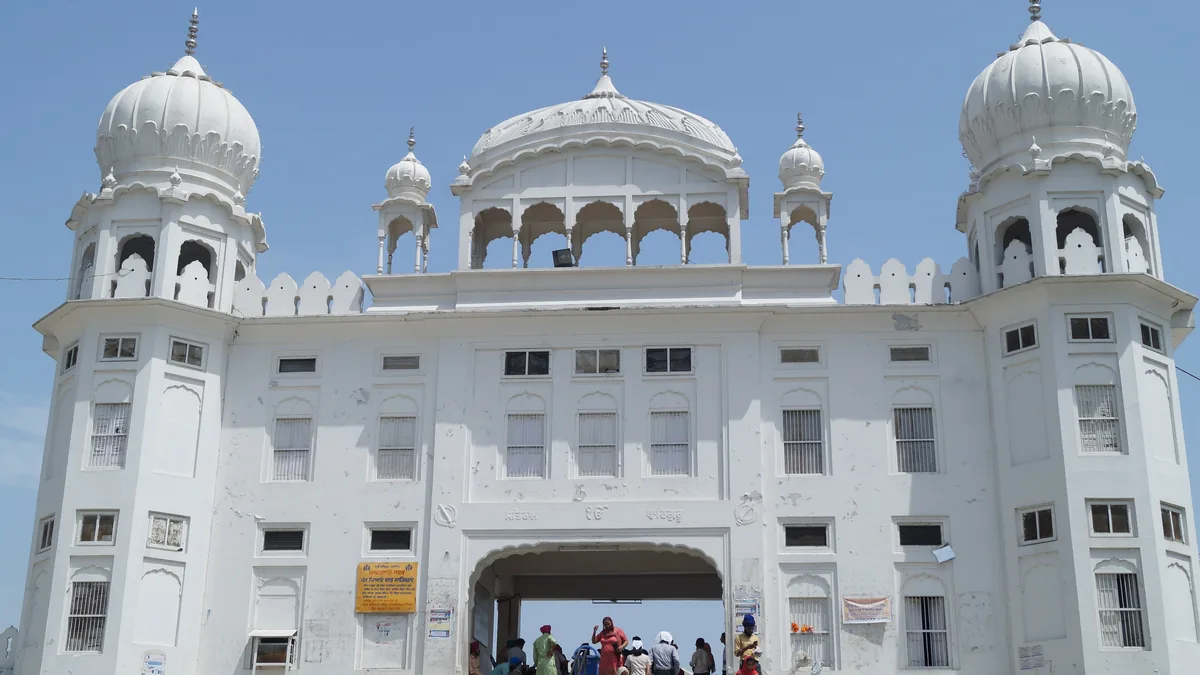
✍️ By Rahul Goyal · Chandigarh Life
Quick answer: Takht Sri Kesgarh Sahib in Anandpur Sahib, Rupnagar district, is one of the five Takhts of Sikhism and the place where Guru Gobind Singh created the Khalsa on Baisakhi, 13 April 1699. Google Maps lists it as open 24 hours. From Chandigarh, Google Maps shows about 81 to 83 km and roughly an hour and a half by road via NH205; the fastest route has tolls.
Anandpur Sahib is the “City of Bliss”, and Kesgarh Sahib is its heart. This guide combines the Rupnagar district portal, SGPC’s own page on the five Takhts, Wikipedia and Google Maps, and it points out where those sources disagree.
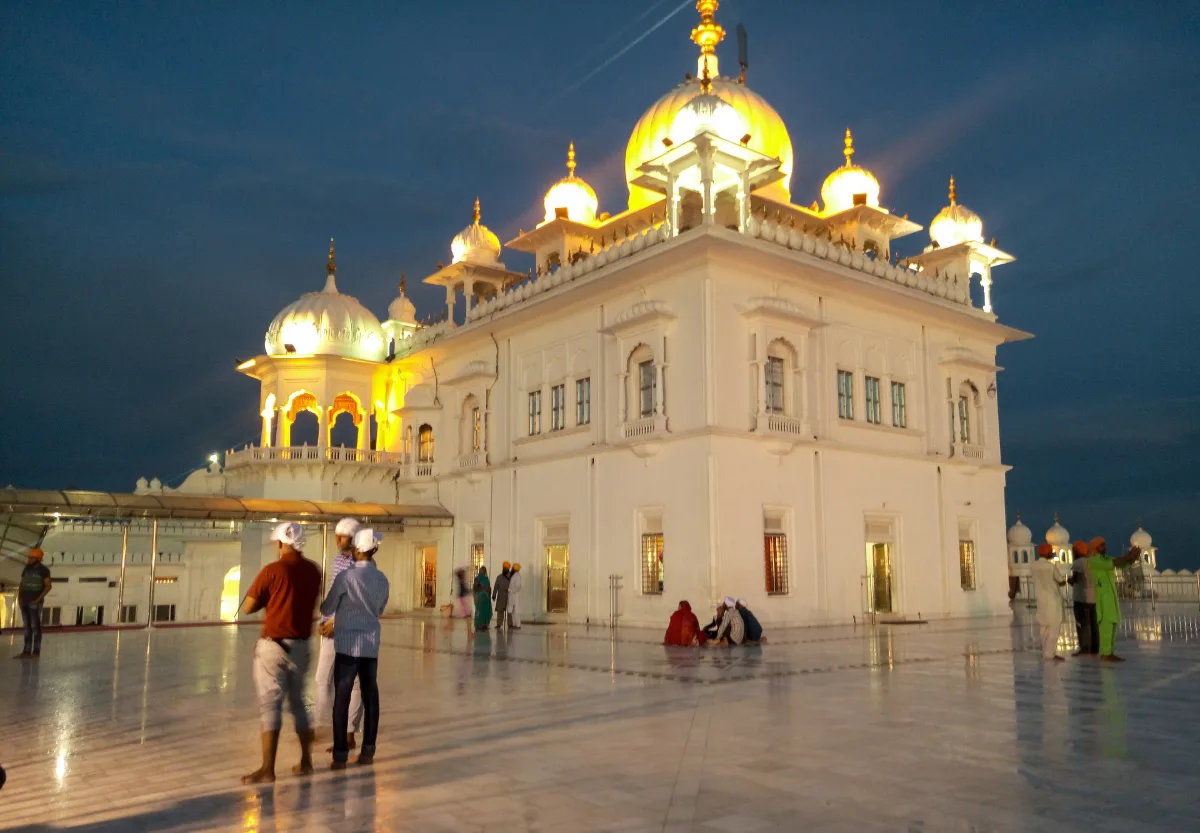
Kesgarh Sahib at a glance
| Detail | What we found |
|---|---|
| Shrine | Takht Sri Kesgarh Sahib, Anandpur Sahib (one of the five Takhts) |
| Where | Keshgarh Sahib, Anandpur Sahib, Punjab 140118 (plus code 6FPX+2H) |
| Why it matters | Birthplace of the Khalsa: Panj Piare baptised on Baisakhi, 13 April 1699 |
| From Chandigarh | 81 to 83 km by road on Google Maps (about 1 h 33 min via NH205; the fastest route has tolls); Wikipedia says 78 km; the Rupnagar district portal says 102 km |
| Timings | Open 24 hours (Google Maps) |
| Amrit Sanchar | Every Sunday, every Wednesday, and on all historical days and Gurpurabs, at 12 noon (SGPC) |
| Parking | A car park is listed at the site on Google Maps |
| Staying | A serai of about 200 rooms (district portal); guest houses (Yatri Niwas) are listed nearby on Google Maps |
| Visitor rating | 4.9 on Google Maps, about 12,000 reviews (20 September 2026) |
Where the Khalsa was born
The Rupnagar district portal describes Kesgarh Sahib as the most important shrine in the Anandpur Sahib complex, standing where the Khalsa was born. On Baisakhi, 13 April 1699, Guru Gobind Singh baptised the five beloved Sikhs, the Panj Piare, here. According to Wikipedia, Anandpur Sahib itself was founded by Guru Tegh Bahadur in 1665 as Chakk Nanaki, named after his mother, and Guru Gobind Singh spent about 25 years in the town.
Wikipedia says the settlement once had a ring of forts linked by earthworks: Kesgarh, Anandgarh, Lohgarh, Holgarh, Fatehgarh and Taragarh. The marble buildings visitors see today replaced the original structures; Wikipedia gives 1936 to 1944 as the years when the main temple was built.
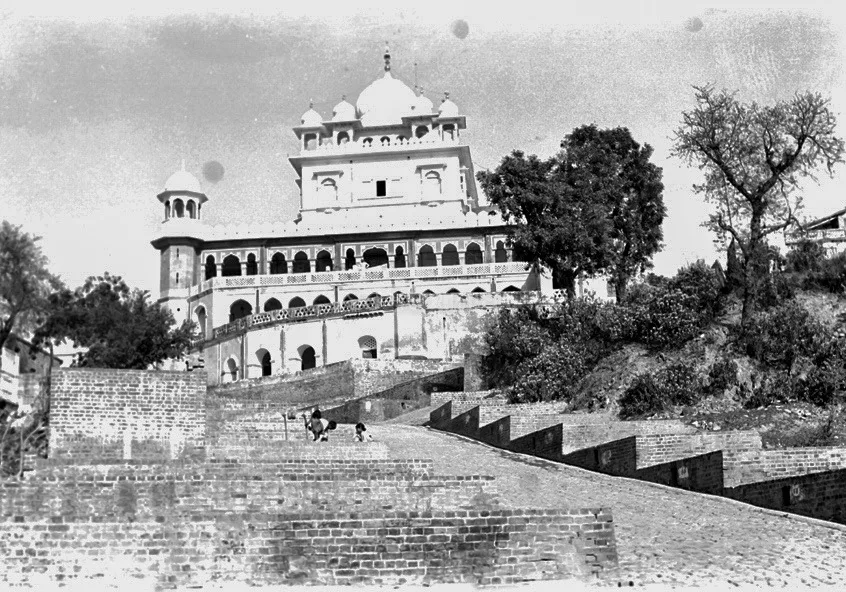
What you will see
The district portal describes a large open marble quadrangle, a hall with a dome and a golden finial, and a room where twelve weapons used by Guru Gobind Singh in battle are displayed. It also mentions a serai of about 200 rooms and says the shrine is reached by walking up a cobbled path. Google Maps describes it as a Sikh place of worship in a grand space and a popular pilgrimage spot with facilities for visitors.
Visiting: timings, ceremonies, parking and stay
- Timings: Google Maps shows the Takht as open 24 hours.
- Amrit Sanchar: SGPC’s page on the five Takhts says the ceremony is held here every Sunday, every Wednesday and on all historical days and Gurpurabs at 12 noon.
- Busy days: Google Maps’ popular-times chart shows Sundays as the busy day, and Anandpur Sahib is known for its spring Hola Mohalla festival, which Wikipedia says draws very large crowds. The dates change each year, so check before you plan around it.
- Parking: Google Maps lists a car park at the site, and visitors describe plenty of parking space nearby.
- Staying: the district portal mentions a serai of about 200 rooms, and Google Maps lists guest houses (Yatri Niwas) close by. Ask at the office for the current booking rules.
- Langar: visitors describe hygienic langar served without limit. This is a visitor comment, not an official statement.
- Etiquette: cover your head, take off your shoes, and keep tobacco and alcohol out of the complex.
How to reach Kesgarh Sahib from Chandigarh
Sources disagree on the distance, so here they all are. On Google Maps the fastest route from Chandigarh is about 83 km (1 hour 33 minutes) via NH205, and it has tolls; a second route via NH205 is 81 km. Wikipedia says 78 km. The Rupnagar district portal says 102 km, well above the route distances on Google Maps, and we cannot say why. The district portal also says the nearest railway station is Anandpur Sahib itself, and that the shrine is on the Rupnagar–Nangal road.
More to see around Anandpur Sahib
- Sikh heritage day trip: Fatehgarh Sahib and Virasat-e-Khalsa: Virasat-e-Khalsa, the museum at Anandpur Sahib, opened in 2011 and was designed by architect Moshe Safdie, according to Wikipedia.
- Wikipedia also lists Gurdwara Sisganj Sahib, Gurdwara Bhora Sahib and Gurdwara Damdama Sahib in the town, and the forts of Anandgarh, Lohgarh, Holgarh, Fatehgarh and Taragarh.
- Best gurudwaras in Punjab and best gurudwaras in Chandigarh for the wider circuit.
- Our Gurpurab guide and Holi events guide for festival dates.
- Close by are Virasat-e-Khalsa and the forts of Anandpur Sahib and Kiratpur Sahib, about 10 km south; Chamkaur Sahib and Nada Sahib are two more stops on the Guru Gobind Singh trail.
Frequently asked questions
Where is Takht Sri Kesgarh Sahib?
It is in Anandpur Sahib, Rupnagar district, Punjab. Google Maps lists the address as Keshgarh Sahib, Anandpur Sahib, Punjab 140118, with plus code 6FPX+2H.
Why is Kesgarh Sahib important?
It is where Guru Gobind Singh created the Khalsa by baptising the Panj Piare on Baisakhi, 13 April 1699, and it is one of the five Takhts of Sikhism.
How far is Kesgarh Sahib from Chandigarh?
Google Maps shows about 81 to 83 km and around 1 hour 33 minutes by road via NH205, and the fastest route has tolls. Wikipedia gives 78 km, and the Rupnagar district portal gives 102 km.
What are the timings?
Google Maps lists the Takht as open 24 hours.
When is Amrit Sanchar held here?
SGPC’s page on the five Takhts says every Sunday, every Wednesday and on all historical days and Gurpurabs, at 12 noon.
Can I stay at Anandpur Sahib?
The district portal mentions a serai of about 200 rooms at the shrine, and Google Maps lists guest houses nearby. Ask at the office for the current booking rules.