

✍️ By Rahul Goyal · Chandigarh Life
Quick answer: Virasat-e-Khalsa, the Sikh heritage museum at Anandpur Sahib, is free to enter, open daily except Monday, and closes on Diwali, Dussehra, 15 August, 26 January, 2 October and for maintenance on 24–31 January and 24–31 July, according to its own website. It sits beside Qila Anandgarh, one of the fort gurdwaras of Anandpur Sahib. Google Maps shows about 82 km and 1 hour 27 minutes from Chandigarh via NH 205, with tolls.
This guide combines the museum, which publishes detailed visitor rules on its own website, with the fort gurdwaras of Anandpur Sahib, where the details are thinner. It draws on the museum’s own website, the Rupnagar district portal, Wikipedia and Google Maps, and it notes where they differ.
Virasat-e-Khalsa at a glance
| Detail | What we found |
|---|---|
| Hours | Daily except Monday. The museum’s home page and footer say 10:30 AM to 4:30 PM; its Visit Us and FAQ pages say 10:00 AM to 4:30 PM, and entry passes are issued from 10:00 AM to 4:30 PM |
| Closed | Every Monday; Diwali, Dussehra, 15 August, 26 January and 2 October; and 24–31 January and 24–31 July for half-yearly maintenance (museum website) |
| Entry | Free. Passes are issued at two ticket counters, one at the entry from Gurdwara Qila Anandgarh Sahib and one at the entry from the parking area; one person can collect a pass for up to 10 people and must show an ID card |
| Rules | No photography or video inside the galleries (exterior photography is allowed); large bags and backpacks are not allowed in the galleries, and a free cloakroom is at the entrance foyer |
| Address and phone | Virasat-e-Khalsa, Sri Anandpur Sahib, District Rupnagar, Punjab 140118; 0188 723 2592 (museum website and Google Maps) |
| From Chandigarh | About 81.8 km, roughly 1 hour 27 minutes via NH 205 on Google Maps, with tolls; the museum’s website says 80 km and about 1.5 hours |
| Visitor rating | 4.7 on Google Maps, about 18,500 reviews (21 September 2026) |
About the museum
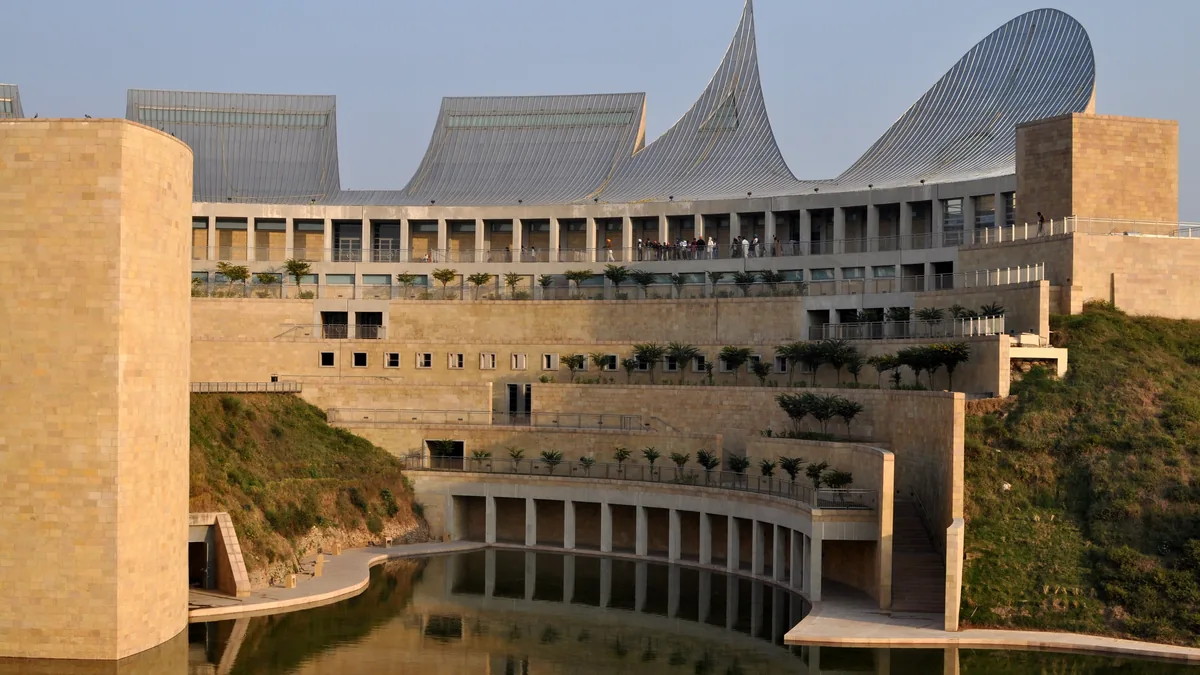
The museum’s website calls Virasat-e-Khalsa (formerly the Khalsa Heritage Memorial Complex) a landmark museum on the 550-year journey of Punjab’s culture and of Sikhism, and says it opened to the public on 25 November 2011. The Rupnagar district portal says it was inaugurated on 25 November 2011 and opened to the public on 27 November 2011, after thirteen years of construction, and describes it as marking 500 years of Sikh history and the 300th anniversary of the Khalsa. The two accounts give slightly different dates and framing, and we cannot say which is right.
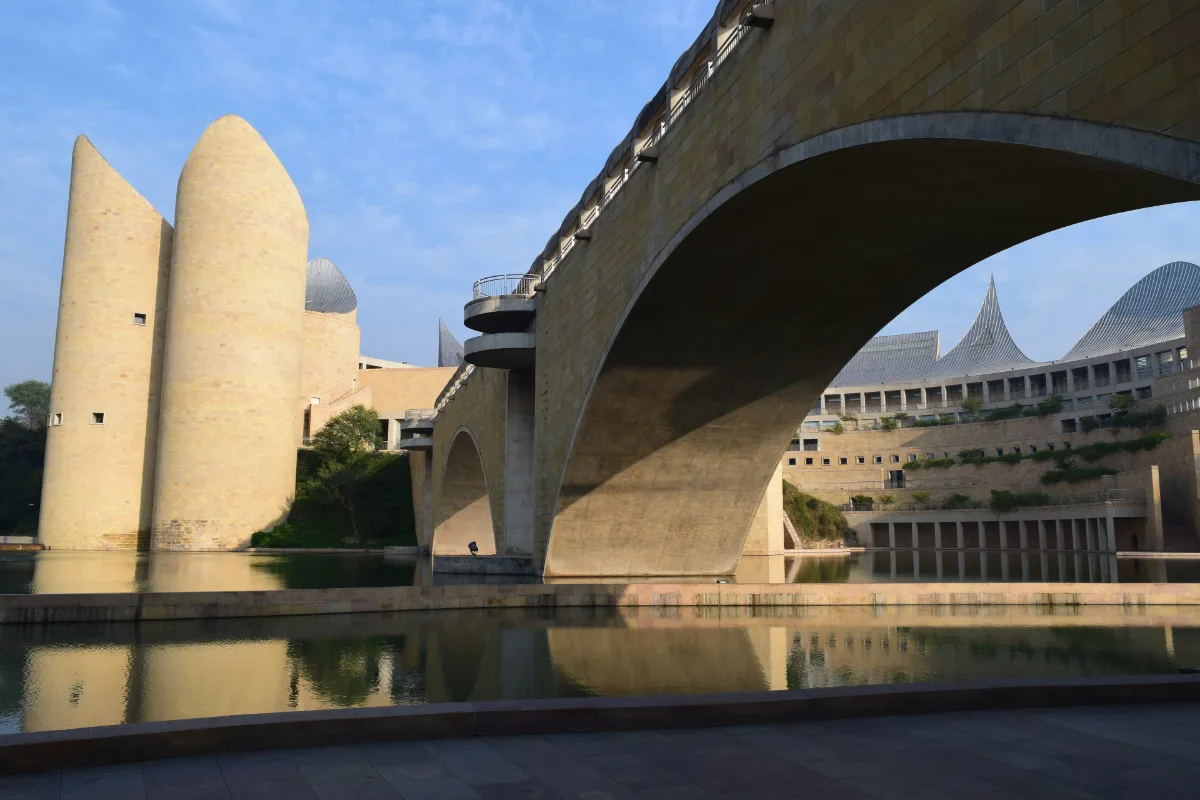
The district portal describes two complexes on either side of a ravine, joined by a ceremonial bridge. The smaller western complex holds an entrance piazza, an auditorium, a two-storey library and changing galleries; the eastern complex holds a round memorial building and the permanent galleries, styled to echo the fortress architecture of the region. Its roofs are concave, steel-clad receptors facing the sky that reflect sunlight towards the gurdwara and the fort, rather than domes. The museum’s website gives the auditorium as centrally air-conditioned with 428 seats, while the district portal says 400.
The museum’s website also says it has been recognised as India’s top museum by visitor numbers and has welcomed close to 11 million visitors in eight years. These are the museum’s own claims, which we have not checked against independent figures.
Visiting: passes, rules and facilities
- Passes: free, at the two counters listed above, and the website also offers online and offline ticket modes. General admission covers the galleries; specially ticketed exhibitions may charge extra, and some popular exhibitions need timed tickets.
- Audio guides: multilingual audio guides are issued after the first gallery, and an ID card is deposited to borrow one.
- Facilities: a cafe under the connecting bridge, two kiosks (one at the parking, one at the ticket booth near Qila Anandgarh), a museum shop, a digital library, parking near the ticket counter, washrooms at several points and free wheelchairs.
- Best time: the museum says school groups come in the mornings and that afternoons and mid-week are quiet, while a family visit works on any day.
- Groups: school and college groups need an ID for the accompanying teacher; other groups use an entry pass.
The forts of Anandpur Sahib
Wikipedia says Guru Gobind Singh built forts, called qilas, at Anandpur Sahib for defence against the hill rajas and the Mughal army: Anandgarh (fort of bliss), Lohgarh (fort of steel), Holgarh (fort of colour), Fatehgarh (fort of victory) and Taragarh (fort of stars), with Takht Kesgarh Sahib at the centre. Its list runs to six entries because it includes Kesgarh alongside the five forts. It says all of them were linked by earthworks and tunnels, and that the original structures were destroyed in 20th-century kar seva rebuilding, with marble gurdwaras built in their place. What stands today is therefore a set of gurdwaras on historic sites, not surviving fortifications.
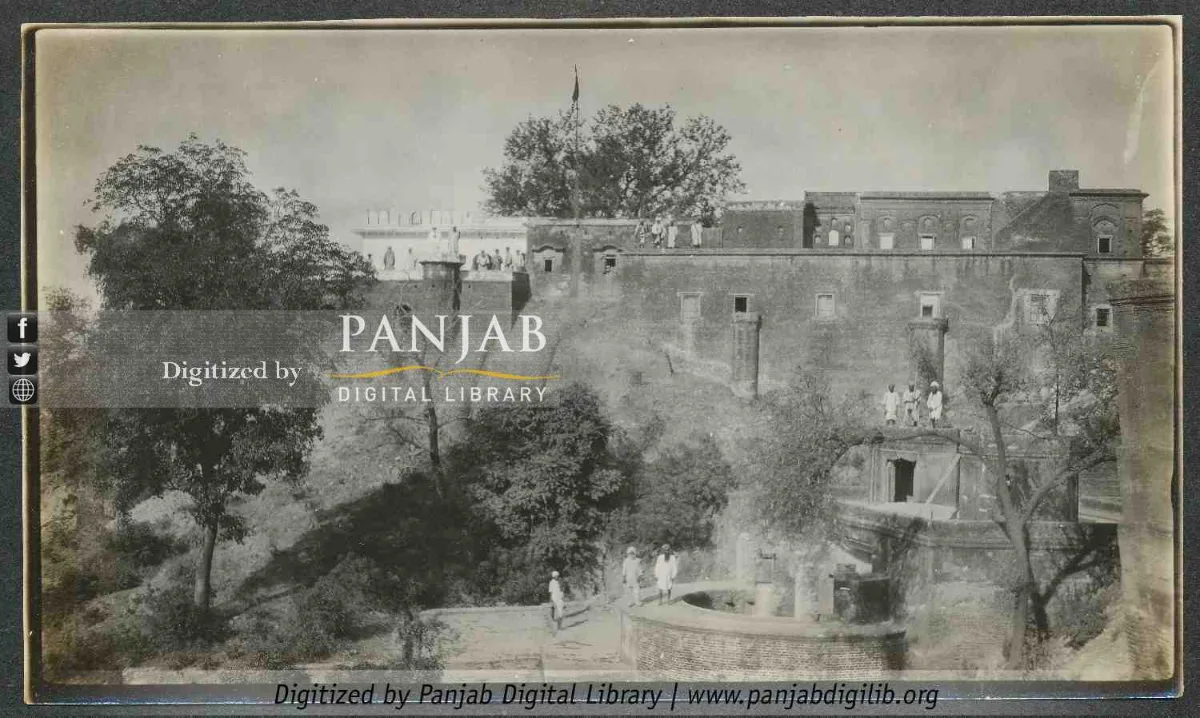
- Qila Anandgarh: Wikipedia calls it the highest fort of Anandpur Sahib, on a hill, and says the present structure was built in the 1970s under Seva Singh, with a Baoli Sahib (stepped well) beneath it reached by a passage. The museum’s ticket counter is at the entry from this gurdwara. Google Maps lists two entries, Qila Anandgarh Sahib (fortress, 4.9 from 99 reviews) and Gurdwara Qila Sri Anandgarh Sahib (4.8 from about 1,200 reviews), both with the phone number 0188 723 2070.
- Kila Lohgarh Sahib: listed on Google Maps on Lodipur Road, Lodipur, Anandpur Sahib, with a gurdwara entry rated 4.7 from 118 reviews.
- Holgarh, Fatehgarh and Taragarh: named by Wikipedia; we did not look up their Maps listings or find dedicated official pages, so we give no timings for them.
Anandpur Sahib in brief
The museum’s website says Anandpur Sahib, the second holiest town of Sikhism, was founded in 1664 by Guru Tegh Bahadur near the ruins of an old place called Makhowal, and that Guru Gobind Singh baptised the first five Sikhs, the Panj Piare, here on 13 April 1699. It adds that the three-day Hola Mohalla festival is held in February or March each year, with martial arts displays.
How to reach Anandpur Sahib from Chandigarh
Google Maps shows 81.8 km and about 1 hour 27 minutes via NH 205, with tolls. The museum’s website says Chandigarh to Anandpur Sahib is 80 km and takes about an hour and a half by road, and lists phone numbers for Chandigarh Transport Undertaking (0172-2700006), Haryana Roadways (0172-2704014) and Punjab Roadways (0172-2704023) for buses from ISBT Sector 43, Chandigarh. Its railway enquiry number for Anandpur Sahib is 01887-232034. Check current timetables before you travel, as the site’s rail table may be out of date.
Plan a longer Sikh heritage trip
- Sikh heritage day trip: Fatehgarh Sahib and Virasat-e-Khalsa for a single-day plan.
- Best gurudwaras in Punjab and forts near Chandigarh.
- Nearby are Takht Sri Kesgarh Sahib and Kiratpur Sahib; in the same district see the Ropar Archaeological Museum and Chamkaur Sahib.
Frequently asked questions
Is Virasat-e-Khalsa free?
Yes. According to the museum’s website, entry is free, with a pass issued at the ticket counters on showing an ID card. Specially ticketed exhibitions may charge extra.
What are the Virasat-e-Khalsa timings?
The museum is open daily except Monday. Its home page says 10:30 AM to 4:30 PM, while its Visit Us and FAQ pages say 10:00 AM to 4:30 PM, so arrive by 10:30 AM.
When is Virasat-e-Khalsa closed?
Every Monday; on Diwali, Dussehra, 15 August, 26 January and 2 October; and for maintenance on 24–31 January and 24–31 July each year, per the museum’s website.
Can I take photographs inside?
No. Photography and video are not permitted inside the galleries, but the exterior of the building can be photographed.
How far is Virasat-e-Khalsa from Chandigarh?
Google Maps shows about 81.8 km and 1 hour 27 minutes via NH 205, with tolls. The museum’s website says 80 km.
Are the Anandpur Sahib forts still standing?
Wikipedia says the original fort structures were destroyed in 20th-century kar seva rebuilding, and marble gurdwaras now stand on the sites. Qila Anandgarh is next to the museum.
Sources
- Virasat-e-Khalsa (official website), home page
- Virasat-e-Khalsa, Visit Us
- Virasat-e-Khalsa, FAQ
- Virasat-e-Khalsa, Tourist Information
- Rupnagar district administration, Virasat-e-Khalsa
- Wikipedia, Gurdwara Qila Anandgarh Sahib
- Google Maps, Virasat-e-Khalsa and Anandgarh and Lohgarh fort listings (read 21 Sep 2026)