

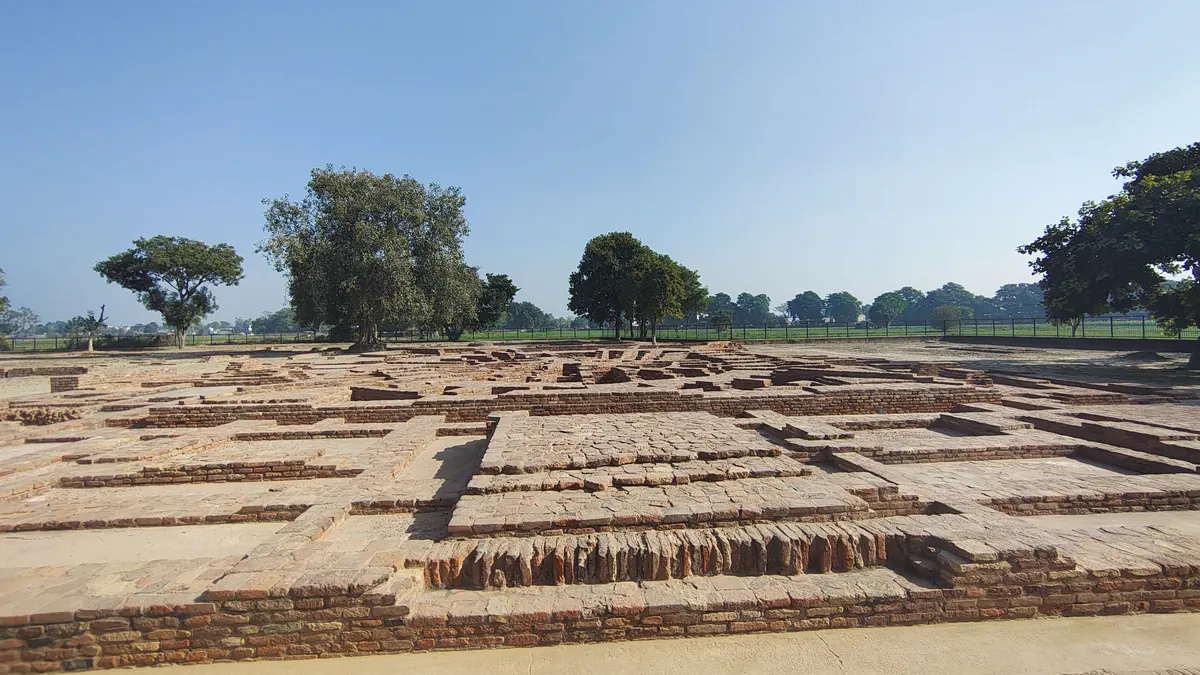
✍️ By Rahul Goyal · Chandigarh Life
Quick answer: Sanghol, known locally as Ucha Pind, is an archaeological mound in Fatehgarh Sahib district with a museum on the Ludhiana–Chandigarh road. The site’s own information board says people lived here from the Late Harappan period, about 2000 BCE, to the medieval period. Google Maps shows about 40 km and 44 minutes by road from Chandigarh, and its listing points to a Monday closure, with opening at 10 am on other days.
Sanghol is a short drive from Chandigarh on the road to Ludhiana. This guide draws on the Fatehgarh Sahib district portal, the site’s information board as photographed on Wikimedia Commons, Wikipedia and Google Maps. We found no official page with timings or an entry fee, and we say so where that matters.
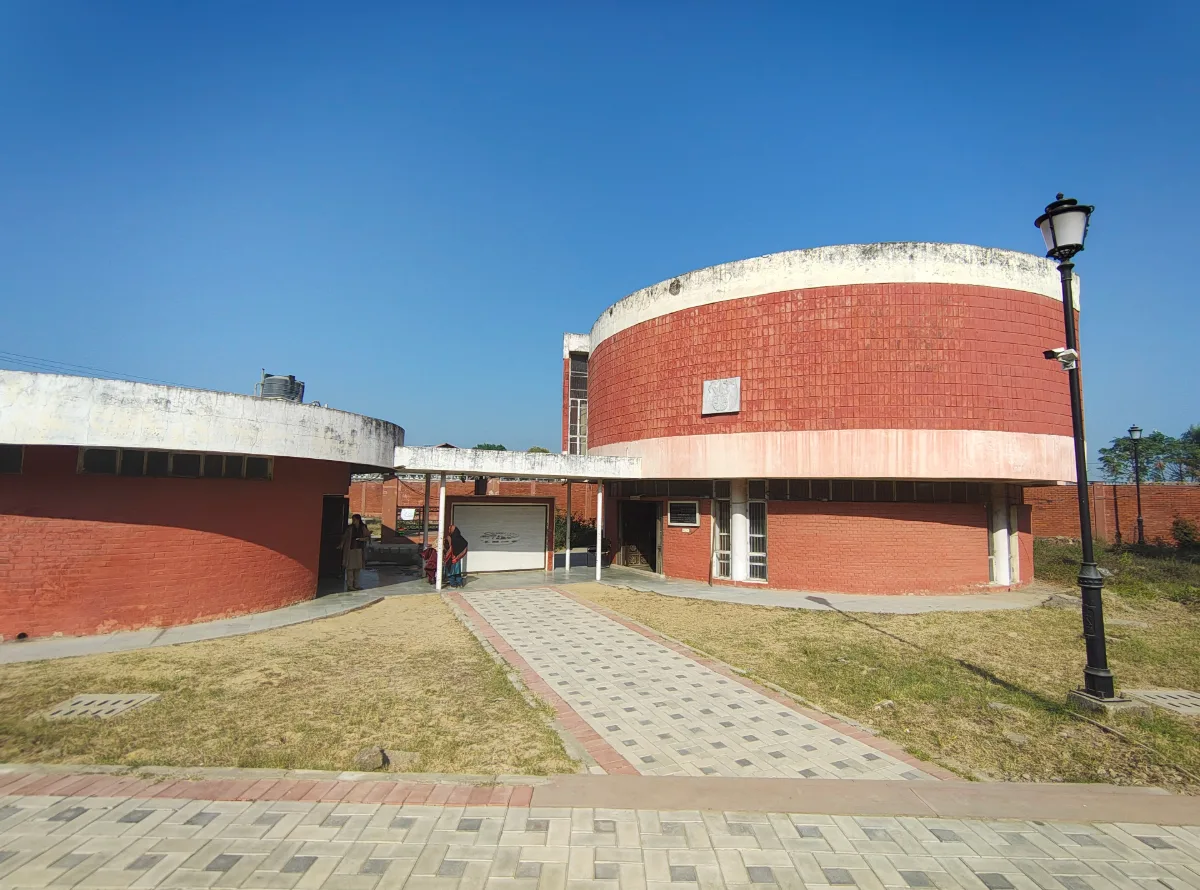
Sanghol Museum at a glance
| Detail | What we found |
|---|---|
| What it is | An excavated mound (Ucha Pind) with a site museum in Khamano block, Fatehgarh Sahib district, on the Ludhiana–Chandigarh road |
| Museum opened | The present building was inaugurated on 10 April 1990 as a unit of the Punjab government’s Department of Cultural Affairs, Archaeology and Museums (district portal) |
| Where | Sanghol Archaeological Museum, Ludhiana–Chandigarh NH, Lohar Majra Khurd, Punjab 140802 (Google Maps) |
| From Chandigarh | About 40.4 km, roughly 44 minutes via NH 5 on Google Maps, with tolls; another route is 44.1 km. Wikipedia also says about 40 km |
| Timings | Google Maps showed the museum closed with “opens 10 am Tue” when we checked on a Monday, so it appears closed on Mondays. We found no official timings |
| Entry fee | We found no official information on fees |
| Visitor rating | 4.3 on Google Maps, about 280 reviews (21 September 2026) |
What the site’s information board says
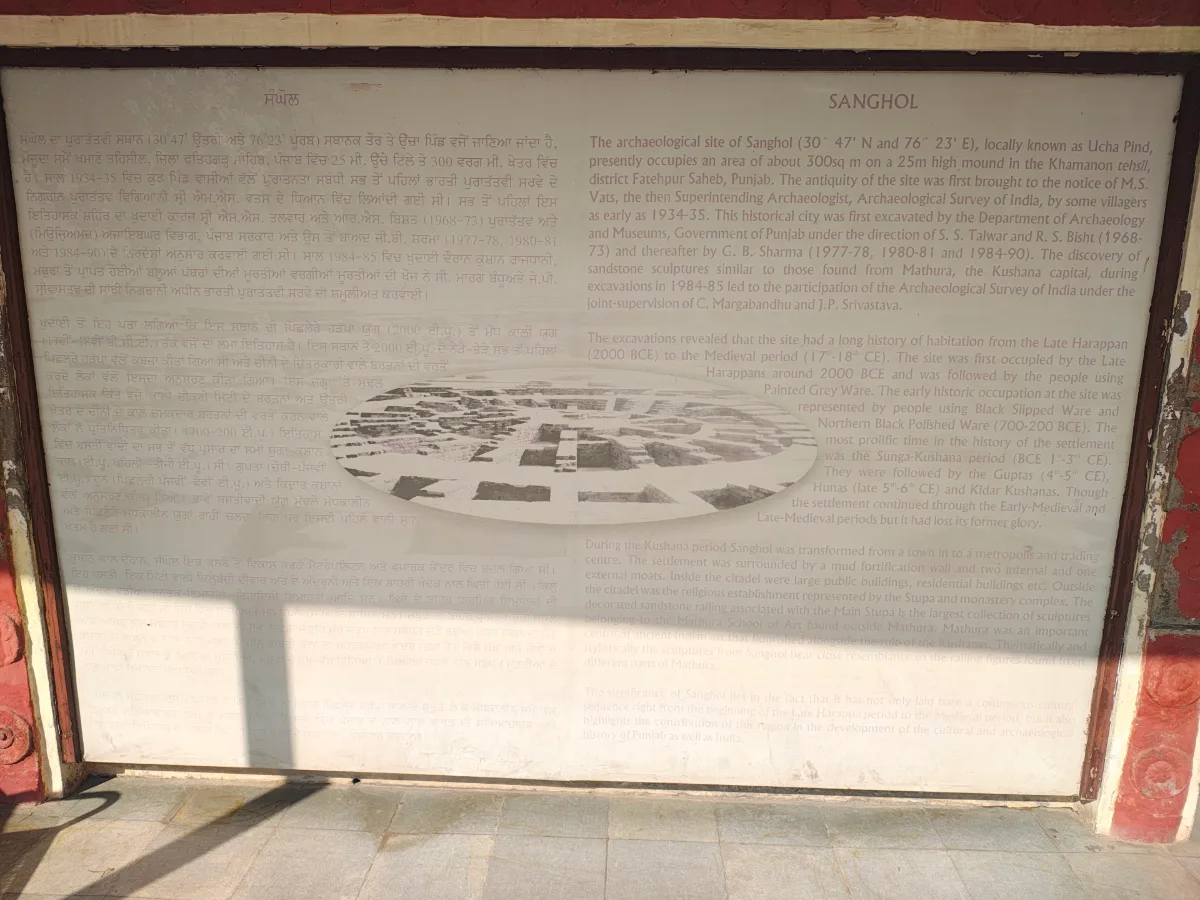
An information board at the site, photographed for Wikimedia Commons in December 2025, gives the history in Punjabi and English. It says the site is locally known as Ucha Pind, stands on a mound about 25 m high in Khamanon tehsil of Fatehgarh Sahib district, and was brought to the notice of an Archaeological Survey of India archaeologist, M. S. Vats, by villagers as early as 1934–35.
According to the board, the Punjab Department of Archaeology and Museums first excavated it between 1968 and 1973 under S. S. Talwar and R. S. Bisht, and again in later seasons until 1990. The discovery in 1984–85 of sandstone sculptures like those from Mathura, the Kushana capital, brought the Archaeological Survey of India into the work. The board says the excavations show habitation from the Late Harappan period, about 2000 BCE, to the medieval period, with the Sunga–Kushana centuries the most prolific, followed by the Gupta and Huna periods.
The board describes Sanghol in the Kushana period as a metropolis and trading centre, surrounded by a mud fortification wall with moats, and says the decorated sandstone railing of the main stupa is the largest collection of Mathura-school sculpture found outside Mathura. These are the site’s own claims, and we have not checked them against a scholarly source.
The 1985 sculptures and the stupa
Wikipedia says a Buddhist stupa was excavated at Sanghol in 1968, and that in February 1985 archaeologists of the Punjab Directorate of Archaeology found 117 carved stone slabs, including 69 pillars and 35 crossbars, together with figures and figurines. It says scholars have identified them as Kushan sculptures of the Mathura school from the 1st and 2nd centuries AD, and that they are in the Sanghol Museum. It also reports coins and seals connected with Toramana and Mihirakula, and says some pieces have been sent as special exhibits to museums abroad.
The same article says more than 15,000 artefacts were collected at the site, ranging from the late Harappan period (about 1720 to 1300 BC) to the 6th century AD, and that stone sculptures are displayed in the museum’s upper gallery. The Wikipedia article also contains passages we left out because they read as unreliable, for example on the area of the site and on gold said to lie beneath it, so treat its figures as unverified.
Visiting: what we could and could not confirm
- Timings: Google Maps suggests the museum is closed on Mondays and opens at 10 am, and we found no official schedule, so ask the Fatehgarh Sahib district administration or check locally before a special trip.
- Fee: no official fee was found.
- Site upkeep: the district portal says the site is maintained by the Archaeological Survey of India and that a tourist complex was “coming up shortly”; the page does not say when it was written, so we cannot say whether that complex exists.
How to reach Sanghol from Chandigarh
Google Maps shows about 40.4 km and 44 minutes via NH 5, with tolls on the route, and 44.1 km via Kurali Bypass Road. The district portal places the museum on the Ludhiana–Chandigarh road, and Wikipedia says it lies about 40 km from Chandigarh on the way to Ludhiana.
Plan a longer day trip
- Sikh heritage day trip: Fatehgarh Sahib and Virasat-e-Khalsa, since Sanghol is in the same district as Sirhind and Fatehgarh Sahib.
- Historical places in Chandigarh and best museums in Chandigarh for more heritage stops.
- Aam Khas Bagh and Gurdwara Fatehgarh Sahib are in Sirhind, in the same district, and the Ropar Archaeological Museum shows another Harappan site.
Frequently asked questions
What is Sanghol?
Sanghol, locally called Ucha Pind, is an archaeological site and museum in Fatehgarh Sahib district, Punjab. Its information board says the mound was occupied from the Late Harappan period, about 2000 BCE, to the medieval period.
How far is Sanghol from Chandigarh?
Google Maps shows about 40.4 km and 44 minutes via NH 5, with tolls. Wikipedia also says about 40 km.
What is displayed at the Sanghol Museum?
Finds from the excavations, including Kushan-period stone sculptures of the Mathura school, according to Wikipedia. The district portal says the museum was set up to preserve and display the site’s treasures.
What are the Sanghol Museum timings?
We found no official timings. Google Maps showed the museum closed on a Monday with “opens 10 am Tue”, so it appears to be closed on Mondays.
Is there an entry fee?
We found no official information on fees, so confirm locally.
Who runs the site and the museum?
The district portal says the site is maintained by the Archaeological Survey of India and that the present museum building was inaugurated on 10 April 1990 as a unit of the Punjab government’s Department of Cultural Affairs, Archaeology and Museums.