
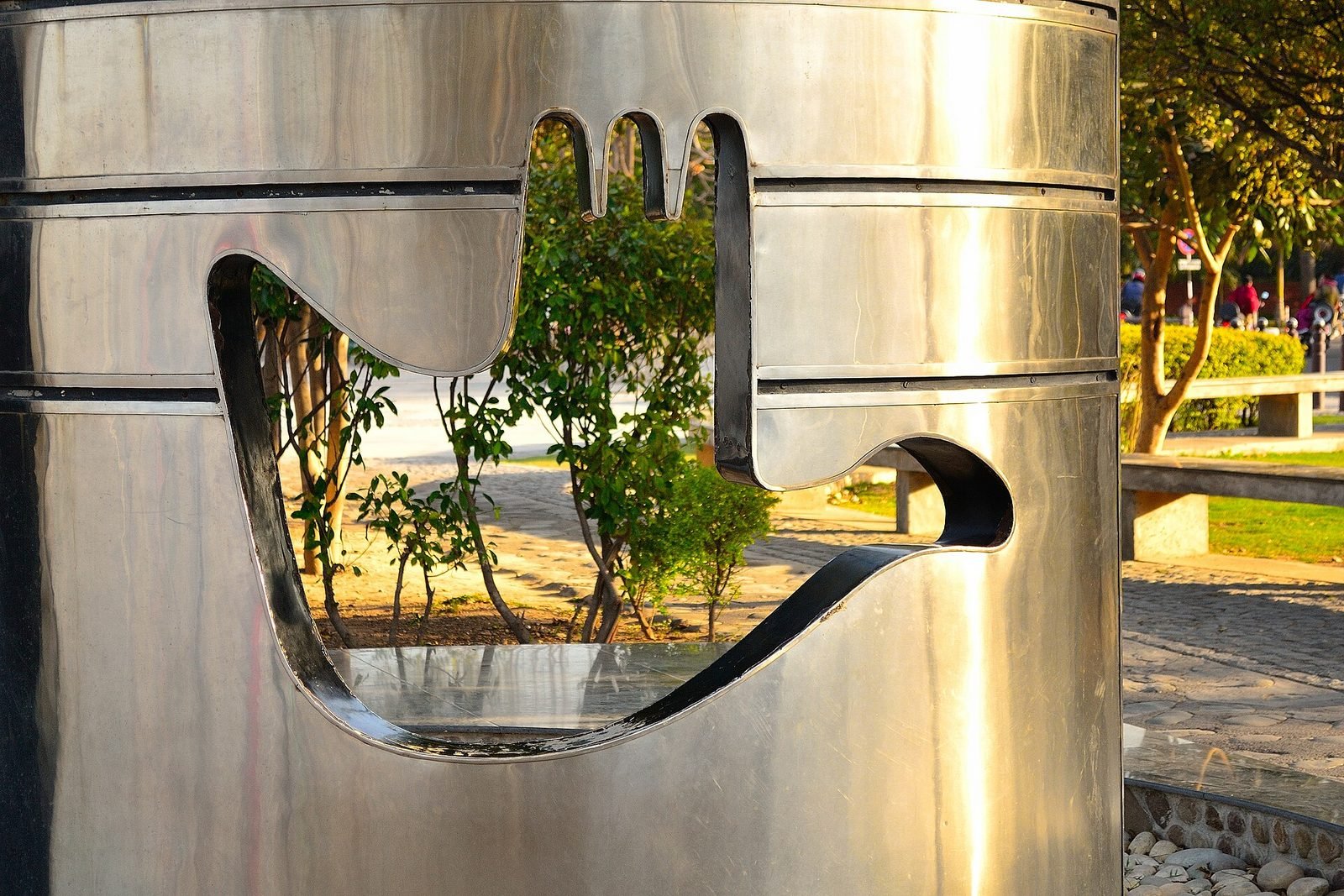
Quick answer: The Capitol Complex, Sector 1, Chandigarh is Le Corbusier’s UNESCO World Heritage masterpiece — the Secretariat, High Court and Legislative Assembly, plus the iconic Open Hand Monument. Free guided tours run daily except gazetted holidays at 10 AM, 12 noon and 3 PM from the Tourist Information Centre, Capitol Complex; carry a valid photo ID and arrive 15 minutes early. On weekends the buildings can be seen from outside only.
Stand in the middle of the Capitol Complex and you feel small in the best possible way — vast concrete monuments rising against the Shivalik backdrop, bold and geometric, exactly as Le Corbusier imagined them. This is Chandigarh’s crowning glory: a UNESCO World Heritage Site and one of the most important works of modern architecture anywhere in the world. 🏛️
Sector 1 also hosted the Sekhon IAF Marathon on Sunday, 4 October 2026.
✍️ Written by Rahul Goyal · Updated June 2026 · Based on our own first-hand visits.
Capitol Complex at a glance 📊
- Status: UNESCO World Heritage Site (since 2016)
- Spread over: about 100 acres
- Designed by: Le Corbusier
- Includes: Secretariat, Assembly, High Court & the Open Hand Monument
- Location: Sector 1, Chandigarh
- Entry: free, usually via a guided tour
The Capitol Complex, Sector 1, is a UNESCO World Heritage Site designed by Le Corbusier — open 10 AM–5 PM, usually via guided tours. It houses the Secretariat, Assembly, High Court and the iconic Open Hand Monument.
| Location | Sector 1, Chandigarh |
| Timings | 10 AM – 5 PM |
| Status | UNESCO World Heritage Site |
| Highlights | Assembly, High Court, Open Hand |
🎥 Watch: On Chandigarh Life
📍 Location & Map
The Spirit of Chandigarh’s Capitol Complex
- The Chandigarh Capitol Complex is more than just a cluster of government buildings lies in the heart of Chandigarh is a monumental testament to visionary architecture and urban planning. Designed by the legendary Swiss-French architect Le Corbusier, More than just a collection of government buildings, it is a powerful embodiment of modern architectural principles, a symbol of post-independence India’s aspirations, and a UNESCO World Heritage Site recognized for its exceptional universal value. For architects, historians, and anyone interested in the intersection of design and societal progress, the Chandigarh Capitol Complex remains an enduring source of fascination and study. The Chandigarh Capitol Complex declared a UNESCO World Heritage Site in 2016, the Capitol Complex remains one of the finest examples of modernist architecture in the world.
A Monument Born from Nehru’s Dream
- The monumental conceived as the nucleus of Jawaharlal Nehru’s dream city, the Chandigarh Capitol Complex encapsulates Le Corbusier’s urban planning theories and his distinct architectural vocabulary. Following India’s independence and the partition of Punjab, a new capital city was envisioned, one that would represent modernity and progress. Le Corbusier, a Swiss-French architect and pioneer of modern architecture, was entrusted with the master plan of Chandigarh, and the Chandigarh Capitol Complex became the jewel in its crown.
Chandigarh: A City That Inspired the World
- Chandigarh, from the 1950s on, wasn’t just another city — it was the talk of forward-thinking architects and urban planners around the world. Architects and planners around the world took note of its bold modern design. But beyond its gridlines and greenery, Chandigarh stood for something bigger: a symbol of progress, hope, and a fresh start for a new India.
Le Corbusier’s Vision, from 1951
You know? Many people don’t realize that Chandigarh is the result of a visionary architectural project that Le Corbusier took on in 1951 and that ran into the 1960s. The city’s most iconic feature, the Chandigarh Capitol Complex, isn’t just about striking buildings — it tells a story. Through powerful symbolism and modern design, it reflects India’s aspirations of unity, openness, and democratic ideals.
Let us explore the complex’s symbolism and charm in this blog.
An Overview of the Capitol Complex Chandigarh
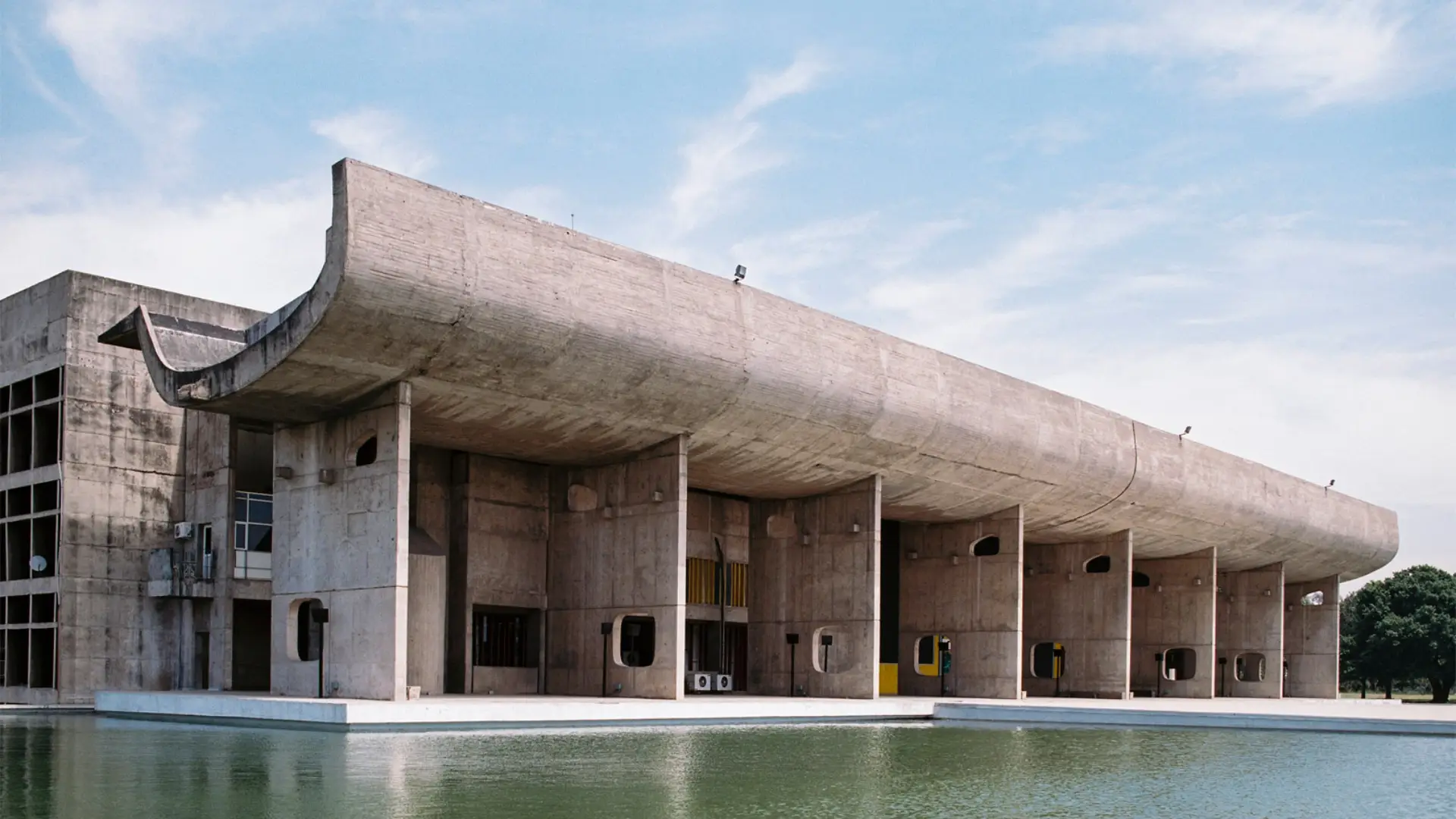
Le Corbusier’s architecture of the Capitol Complex in Chandigarh is a complex, iconic design that symbolizes the nation’s independence movement. The complex consists of the Palace of Assembly, the Secretariat, and the High Court. The Palace of Assembly was built between 1951 and 1962 and inaugurated on 15 April 1964; a tall hyperbolic tower rises over its assembly chamber.
The Capitol Complex sits at the head of Chandigarh’s master plan, which Le Corbusier took on in 1951. The complex represents the excellent governance, culture, and architectural expertise of India’s independence movement.
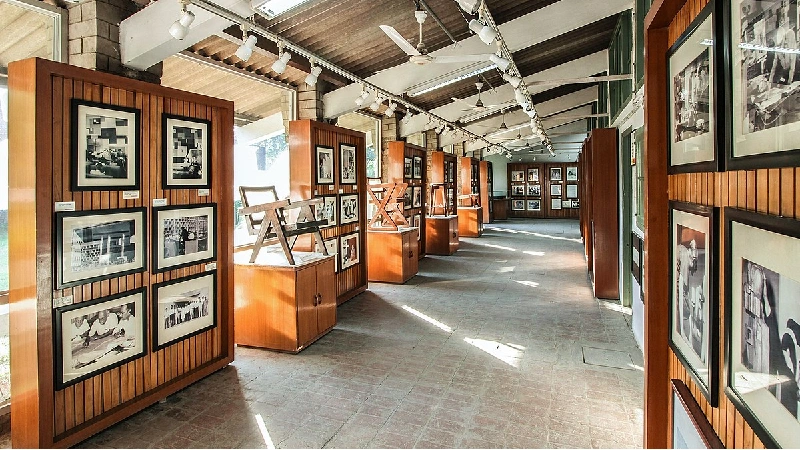
The Capitol Dining Table was created for the Palace of Assembly by Pierre Jeanneret and is an iconic design in itself.
The High Court and its Significance
Architectural Brilliance of the High Court Building


- The High Court Building of the Chandigarh Capitol Complex is a masterpiece of monumental and sculptural architecture celebrating the independence of India. The building is topped by a deep parasol roof, a wide cantilevered slab that shades the spaces below. Its entrance is marked by three giant pillars painted in bright primary colours.
Capitol Complex Chandigarh’s High Court Geometric Precision in Design
- The design of the building is anchored by triangular regulating lines, which also play a significant role in shaping its geometry. These lines run across the length of the courtrooms and are used to divide each space into equal parts. This system allows for easy access and circulation within the court complex, while simultaneously highlighting the strength of imperious Indian judiciary.
Integration Within the Capitol Complex
- The High Court is one of the complex’s three main buildings, along with the Palace of Assembly and the Secretariat. The Punjab and Haryana High Court moved here on 17 January 1955. Its dimensions are governed by modular combined with triangular regulating lines, thus conveying Le Corbusier’s vision of structural integrity supported by minimal and geometric forms.
A Lasting Legacy of Modern Indian Architecture
- The capitol complex has been hailed as one of India’s finest monuments and immortalizes Le Corbusier’s contribution to modern architecture.
The Assembly Building and its Meaning
Iconic Landmark of the Capitol Complex Chandigarh
- The Assembly Building is a prominent landmark in the Capitol Complex of Chandigarh, India. It is a visually striking piece of architecture with its dramatic cathedral-like silhouette and bright white exterior that brings chimes to mind.
Home to the Punjab and Haryana Legislatures
- The Assembly Building was built between 1951 and 1962 and inaugurated in 1964. Today it houses both the Punjab and the Haryana legislative assemblies. Though it has undergone some renovations over the years, the building’s modernist design still captures the essence of its time and place.
A Blend of Concrete and Natural Light
- The façade of the building features large expanses of glass that provide natural illumination and views of an expansive green lawn outside the building. The building’s structure is made up of reinforced concrete, which makes it sturdy and durable but also gives it an imposing solidity.
The Monument Capitol Complex’s Vibrant Interiors with Artistic Flair
- The interior halls and chambers are decorated with ornate furnishings and artworks, ensuring that legislative sessions are brighter, more vibrant, and celebratory than any could be imagined in a court house or Parliament hall elsewhere.
Symbol of Democratic Power and Respect
- The Assembly Building serves as a symbol of the importance and power of government in Chandigarh. It is a powerful reminder that one must respect government no matter who holds office because it ensures our freedom and safety .
A Peek into the Secretariat Building of Chandigarh’s Capitol Complex
The Secretariat Building – A Landmark of Governance
- The Secretariat Building of the Chandigarh Capitol complex is one of three structures that Le Corbusier and his cousin Pierre Jeanneret designed for the city’s capitol. The building stands out visually and physically from the rest of the city, embodying the dignity of the three fundamental powers of the two states of Punjab and Haryana.
Visit Details – The Secretariat Building, Chandigarh
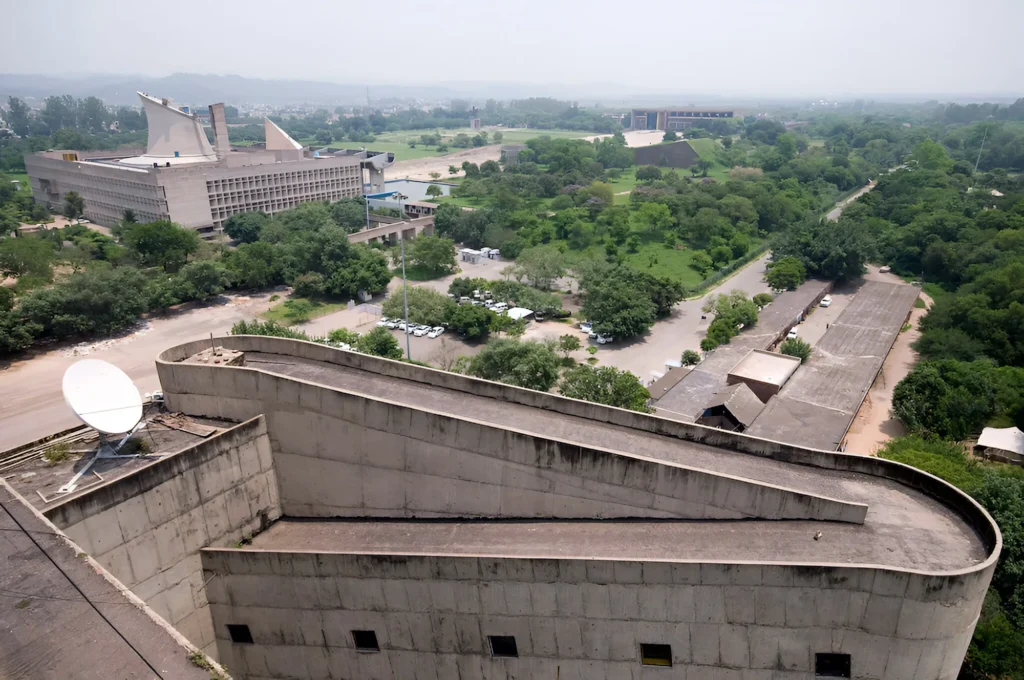
- The building houses the administrative offices of both Punjab and Haryana. Completed in the 1950s, it is about 254 m long and 42 m tall, the largest building in the complex.
| Detail | Information |
|---|---|
| Address | The Secretariat Building, Capitol Complex, Sector 1, Chandigarh, 160001 |
| Entry Fee | Free (Photo ID required for access) |
| Visiting Hours | 10:00 AM – 5:00 PM (Monday to Friday) Exterior visits only on weekends |
Structure & Facilities – What’s Inside the Building
- Between the buildings are open plazas, a long central esplanade and reflecting pools. Visiting this complex will help you understand the importance of planning in developing urban areas and will give you an insight into Le Corbusier’s architectural style.
The Green Building Summit and its Impact
A complex and dynamic space, the Chandigarh Capitol Complex (CCC) is an exemplary modern architecture of ‘functionalism’ in India. Designed by Le Corbusier’s , the CCC’s three buildings are located towards the Shivalik Hills of Chandigarh. The complex has three main buildings: the Palace of Assembly, the Secretariat and the High Court. These structures are designed to provide ample spaces for judicial, legislative, and executive functions of government.
The Capitol Complex Chandigarh houses a large dining table designed by Pierre Jeanneret for the Palace of Assembly.
The complex was designed to provide a calm site for the efficient functioning of these three pillars of democracy for the displaced Punjab government.
Architecture Talk with Le Corbusier’s Inspiration
Le Corbusier’s architectural works are renowned for their striking designs, cantilevered roofs and air circulation systems. He is known as the “father of modernism” because of his groundbreaking use of these features in his buildings.
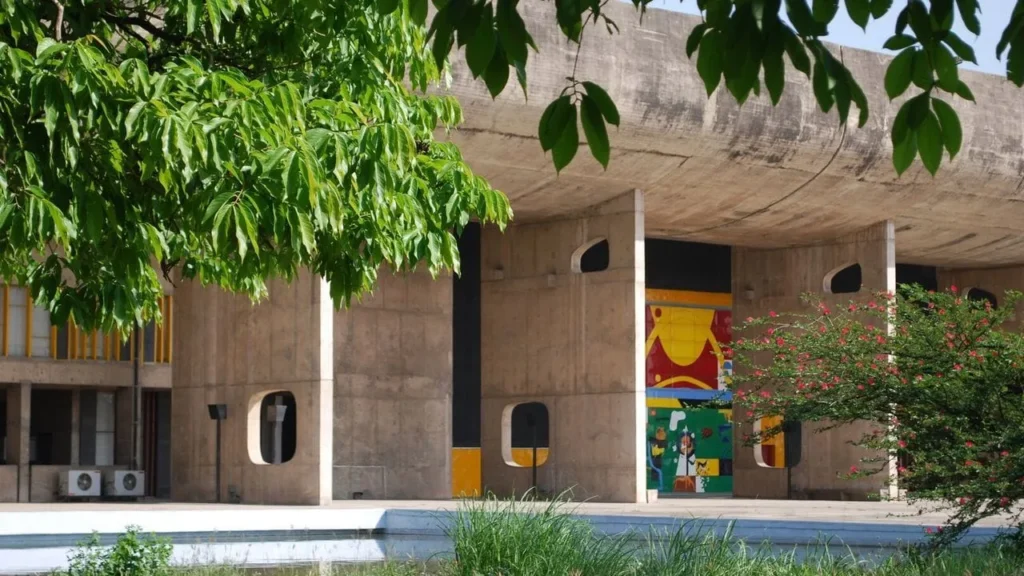
The Capitol Complex in Chandigarh, India was designed by Le Corbusier and Pierre Jeanneret to provide a line of sight to the rest of the city, but the architect changed his plans to place artificial hills between the two buildings. The complex was built with Purism features such as geometric shapes and bright colors as well as Brutalism features such as reinforced concrete and angled roofs.
The Palace of Assembly, the last of the three main buildings, was completed in 1962 and inaugurated in 1964. His architecture has been the subject of extensive analysis and research. Much of it looks at how he used different techniques such as Purism, Brutalism, and pre-stressed reinforced concrete in his works
News on the UNESCO Heritage Site
The Chandigarh Capitol Complex was inscribed as a UNESCO World Heritage Site in 2016, as part of “The Architectural Work of Le Corbusier”. Le Corbusier took on the design in 1951 and is a complex of architectural monuments that symbolizes the emerging modern city of Chandigarh. It is one of the most prominent structures of modern architecture in the world, and its complex shape and boldness reflect Le Corbusier’s ideas on urban planning.
The complex was built to house the legislative assembly of Punjab and Haryana state. It has three main buildings (the High Court, the Palace of Assembly and the Secretariat), linked by a long central esplanade. In recent years, both buildings have been restored to their former glory, but there is still a lot to be done before they are at their prime again. The complex is open to tourists and can be visited at Capitol Complex Tourist Centre, Chandigarh. Entrance is free for everyone.
Projects Inspired by Chandigarh Capitol Complex
The Vision Behind Chandigarh Capitol Complex
- Chandigarh Capitol Complex is a complex of buildings in the city of Chandigarh, India designed by the famous architect Le Corbusier and his cousin Pierre Jeanneret in the early 1950s. It stands out visually and physically from the rest of the city and embodies the dignity of the three fundamental powers – executive, legislative, and judicial. The complex includes a legislative assembly building (known as Assembly Hall), a high court building (known as Judicial complex), a planned Governor’s Palace that was never built, a secretariat building (known as Secretariat), and other buildings. The landscape design for the complex included design for Assembly hall and orchard garden; these two were meant to reflect the rural ethos of Chandigarh.
Strategic Location & Natural Harmony
- The site at which the complex stands is strategically located at the geographic ‘head’ of the city against backdrop of Shivalik hills. This high-profile location makes it one of the important symbols of the city. Le Corbusier’s believed that buildings should be designed to blend in with their natural surroundings, rather than standing out as artificial structures.
An Icon of Modern Architecture
- The complex has been recognized for its architectural brilliance and aesthetic value. Its modern architecture has made it one of the most sought-after tourist destinations in India.
Le Corbusier’s Design Philosophy in Action
- The Chandigarh Capitol Complex is a true masterpiece of modern architecture. Its design is both simple and elegant, and it seamlessly blends in with its natural surroundings. The complex is a testament to Le Corbusier’s vision and skill as an architect, and it continues to inspire architects and designers around the world today. Le Corbusier’s was known for his meticulous attention to detail, and this is evident in every aspect of the complex.
The Role of Open Spaces
- One of the most striking features of the Capitol Complex Chandigarh is its use of open spaces. Le Corbusier’s believed that open spaces were just as important as buildings, and that they should be incorporated into the design of a complex. The Chandigarh Capitol Complex is a perfect example of this philosophy. The buildings are arranged around a large central plaza, which serves as a gathering place for visitors and locals alike. The plaza is also home to several fountains and sculptures, which add to its beauty and charm.
FAQ’s
📋 Visitor Information
| Address | HIGH COURT, Capitol Complex, सेक्टर 1, Chandigarh, चंडीगढ़ 160001, India |
| Phone | 1800 180 2116 |
| Opening hours | Monday: 9:00 AM – 5:00 PM Tuesday: 9:00 AM – 5:00 PM Wednesday: 9:00 AM – 5:00 PM Thursday: 9:00 AM – 5:00 PM Friday: 9:00 AM – 5:00 PM Saturday: 9:00 AM – 5:00 PM Sunday: 9:00 AM – 5:00 PM |
| Website | http://chandigarhtourism.gov.in/ |
Info via Google Maps · View on Google Maps
A little history & geography 📖
The Capitol Complex was designed by the Swiss-French architect Le Corbusier as the seat of government for Punjab and Haryana. Built in the 1950s and 60s, it brings together three monumental buildings — the Secretariat, the Legislative Assembly and the High Court — along with the iconic rotating Open Hand Monument and the Tower of Shadows. In 2016, UNESCO recognised it as a World Heritage Site as part of Le Corbusier’s architectural work across the globe.
What it’s like to visit ✨
Visiting the Capitol Complex is best done on the free guided tour, because the scale only really hits you up close. You stand beneath the Assembly’s dramatic hyperbolic roof, take in the brutalist lines of the Secretariat, and end at the giant Open Hand Monument that slowly turns in the wind — Chandigarh’s official emblem. It’s quiet, contemplative and unlike anywhere else in the city.
Good to know before you go ✅
- Accessibility: the venue has a wheelchair-accessible entrance.
- Timings: roughly 10 AM–5 PM
- Entry: free, but usually only via a guided tour
- Carry ID: it’s a high-security government zone, so a government photo ID is a must
- Booking: book a free slot online on the Chandigarh Tourism website or through the Tourist Information Centre, Capitol Complex (0172-2700225)
- Best for: architecture lovers and curious first-time visitors
Is Capitol Complex worth visiting? 🤔
For anyone who appreciates architecture or history, it’s an absolute must — there’s nothing else like it in India. The free guided tour is well worth the slight planning effort (carry your ID), and it pairs beautifully with the nearby Open Hand Monument and Rock Garden.
What is Le Corbusier’s Chandigarh Capitol Complex?
Le Corbusier’s Chandigarh Capitol Complex is a masterpiece of monumental and sculptural architecture designed by the renowned architect Le Corbusier and his cousin Pierre Jeanneret in the early 1950s.
The complex consists of three buildings—the Palace of Assembly, the Secretariat Building, and the High Court—set in Sector 1 at the head of the city plan.
Le Corbusier envisioned the complex as a ‘parliament in the open air’, and it has been described by him as a ‘monumental work of architecture’.
What are the historical significance of Le Corbusier Chandigarh Capitol Complex?
Le Corbusier’s Chandigarh Capitol Complex was commissioned by Jawaharlal Nehru in the 1950s in post-colonial India. The complex was designed to celebrate the independence of a nation and reflects the dignity of the three fundamental powers. The complex occupies the compositional apex of the Chandigarh Plan and is the largest monumental complex designed and built by Le Corbusier.
What are the Capitol Complex Chandigarh timings?
The Capitol Complex is open 10 AM to 5 PM daily except gazetted holidays. On weekdays you can go inside the buildings; on weekends you can see them from outside only. The free guided tour is the best way to visit. Carry a government photo ID, as it is a secure government zone.
How do I book a Capitol Complex tour in Chandigarh?
Book a free slot (10 AM, 12 noon or 3 PM) on the Chandigarh Tourism website, or contact the Tourist Information Centre, Capitol Complex on 0172-2700225. They are free, but you must carry a valid government photo ID.
Why is the Capitol Complex a UNESCO World Heritage Site?
It was recognised by UNESCO in 2016 as part of Le Corbusier’s outstanding contribution to modern architecture, alongside his works in other countries.
In which sector is the Capitol Complex, Chandigarh?
The Capitol Complex is in Sector 1, Chandigarh, close to the Rock Garden and Sukhna Lake.
Is the Capitol Complex wheelchair accessible?
Yes, the Capitol Complex has wheelchair-accessible access. Do carry a government photo ID, as it is a secure government zone.
🛍️ A Le Corbusier souvenir
Fascinated by Le Corbusier’s Chandigarh? Our Chandigarh College of Architecture heritage magnet (₹299) celebrates the city’s modernist legacy — a unique gift for design lovers.
Explore More in Places to Visit
- Chandigarh Park Guide 2025: Top Parks You Must Visit in the City Beautiful
- Chandigarh’s Serene Waterscapes: Exploring the Famous Lakes
- Chandigarh’s Hidden Gem: The Fascinating International Doll Museum
- Chhatbir Zoo, Chandigarh, Zirakpur: Timings, Tickets, Location, Tariff
- Citco Chandigarh’s Best-Kept Secrets: Exploring the City’s Offbeat Attractions
Also read: Chandigarh Tourism: the official department, app and helpline